Things to Do in San Marino
Three towers, one mountain, and seventeen centuries of refusing to be conquered
Top Things to Do in San Marino
Find activities and tours you'll actually want to do. Book through our partners -- no booking fees.


Plan Your Trip
Essential guides for timing and budgeting
Climate Guide
Best times to visit based on weather and events
View guide →Day Trips
The best excursions and nearby destinations worth the journey
Explore day trips →Where to Stay
Best neighbourhoods, hotel picks, and booking tips
Find hotels →Travel Insurance
What's required, what coverage matters, and how to get a quote
Read guide →What to Pack
Climate-specific gear, essentials, and what to leave at home
See packing list →When Should You Visit San Marino?
Tap a month for weather, crowds, and highlights
View full year-round climate guide →Your Guide to San Marino
About San Marino
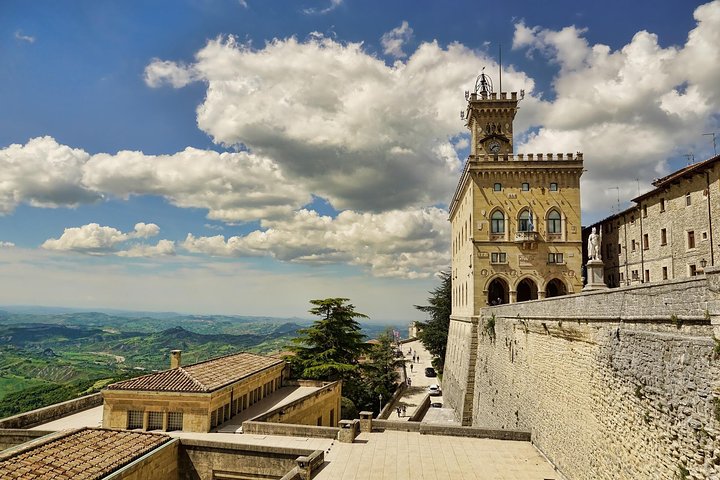
San Marino announces itself early. Monte Titano rises from the Romagna plain like a pale fist. Three medieval towers catch the light. You will pull over. The air shifts as the road climbs. Coastal heat gives way to mountain breeze. Pine resin drifts in. Charcoal and flatbread scent the air near Porta San Francesco. This is the oldest surviving republic.
Founded in 301 AD by a fleeing stonecutter. Stubbornness clings like lichen on walls. The centro storico is compact. Twenty minutes end to end. Palazzo Pubblico on Piazza della Libertà hosts the guard change. Renaissance uniforms still in use. First tower Guaita delivers wind strong enough to make eyes water. Views stretch fifty kilometers east to the Adriatic.
San Marino is tiny. Sixty-one square kilometers of sovereignty inside Italy. Contrada del Collegio fills with duty-free shops. Souvenir stands sell crossbow magnets. Crowds arrive because the place earns them. Walk ten minutes downhill. Borgo Maggiore market smells of aged Fossa cheese and Sangiovese. Medieval lanes become yours alone.
Stay past the day-trippers. Tour buses roll away. Evening light turns Cesta tower warm sandstone against dark sky.
Travel Tips
Transportation: San Marino has no airport. No train station either. Most visitors start from Rimini. Half-hour bus ride climbs to Piazzale Calcigni in Borgo Maggiore. Cable car finishes the ascent in two minutes. The ride alone justifies the fare. Romagna farmland drops beneath your feet. Inside the old city, everything is on foot. Stone streets are steep. Slippery after rain. Leave fashion shoes behind. If driving, park at P1 below the old town. Do not circle higher. Summit lots fill early. One-way system sends you back down fast. Bologna day-trippers take the train to Rimini. Then connect to the bus. Cheaper than autostrada toll plazas. Less stressful too.
Money: San Marino uses the euro. Not an EU member. Your wallet will not notice. Cards work in most centro storico shops. Smaller vendors near Borgo Maggiore market prefer cash. Older cafes along Contrada Omagnano do too. ATMs cluster around Piazza della Libertà. Another cluster sits near the cable car station. Duty-free status cuts prices on alcohol, perfume, electronics. Compare against Rimini first. Savings vanish on tourist souvenirs. Old-town restaurants charge for altitude and view. Borgo Maggiore trattorias cost less. Same Romagnol food. Domagnano parish prices match Italian countryside norms.
Cultural Respect: Sammarinese identity runs deep. Call it Italy and locals bristle. It is not. Own government. Own stamps. Own football team. One World Cup qualifying goal in history. They celebrated like champions. Dress codes matter. Basilica del Santo enforces them. Palazzo Pubblico does too. Bare shoulders or short shorts get you turned away. Changing of the guard is real. Stay behind the ropes. Keep voices low. Tipping is not customary. Service is included. Round up if you like. September third brings Festa di San Marino. National holiday. Expect processions. Crossbow competitions. Civic pride flares fierce. Join in. Buy a glass of Brugneto wine. Do not ask why they make such a fuss. They have earned it.
Food Safety: San Marino food is Romagnol to the bone. Quality stays high. Supply chain is short. Ingredients cross from Emilia-Romagna farms each morning. Piadina is the essential bite. Thin flatbread blistered on terra-cotta. Folded around squacquerone and rocket. Porta San Francesco stands serve it well. Char gives nuttiness supermarket versions lack. Passatelli in brodo warms cold days. Breadcrumb and Parmigiano noodles swim in clear broth. Strozzapreti with ragù is the regional pasta. Tap water is safe everywhere. Avoid restaurants on Contrada del Collegio. Laminated menus in six languages. Microwaved lasagna at steep prices. Walk two blocks. Food improves fast. Ristorante Righi near the second tower serves handmade tortelloni. Worth every step of the climb.
When to Visit
San Marino's weather is governed by its altitude, roughly 750 meters above sea level on Monte Titano. Expect several degrees cooler than Rimini on the coast below. The hilltop catches wind the plain does not. Summer, June through August, brings daytime temperatures of 25 to 30 degrees Celsius (77 to 86 Fahrenheit), warm enough for shirtsleeves but rarely the suffocating heat that flattens Rome or Florence.
July and August are peak season. The centro storico fills with Italian and German day-trippers by mid-morning. Hotel availability tightens across the republic. Accommodation rates climb to their yearly high. If you can tolerate crowds and want long daylight hours for walking the three towers, this is when to come. Book well ahead.
September is likely your best single month. The summer crush thins out after the first week. Temperatures settle to a comfortable 20 to 25 degrees Celsius (68 to 77 Fahrenheit). The Festa di San Marino on September third brings crossbow tournaments, parades, and an atmosphere that feels local rather than staged. Hotel prices tend to drop noticeably from the August peak.
The autumn light on the limestone walls has a golden quality that summer's haze washes out. October stays mild, around 15 to 20 degrees Celsius (59 to 68 Fahrenheit), with occasional rain but nothing that should deter you. The hillside below the towers turns russet and ochre. The views toward the Adriatic sharpen as the summer humidity breaks.
This is the sweet spot for budget-conscious travelers. Accommodation runs considerably cheaper than peak season. The old town is quiet enough to hear your own footsteps on the cobblestones. November through February is San Marino's cold season, and it can be cold. Temperatures drop to 0 to 7 degrees Celsius (32 to 45 Fahrenheit).
Fog rolls up from the plain and wraps Monte Titano in a gray wool that can last for days. The wind at the Guaita tower will cut through anything lighter than a proper winter coat. Snow is not unusual in January. Most souvenir shops shorten their hours or close entirely. Some smaller hotels shut for the season. That said, a clear winter day on the ramparts, when the fog lifts and the snow-dusted Apennines appear to the west, is one of the most striking views in this part of Italy.
Accommodation is at its cheapest. The few restaurants that stay open serve heartier mountain food: passatelli in rich broth, polenta with wild boar ragù, local wines by a fireplace. Spring arrives in March with temperatures climbing back through 10 to 18 degrees Celsius (50 to 64 Fahrenheit). Wildflowers appear on the slopes below the towers.
Visitors return gradually. April and May are excellent months. Warm enough for comfortable walking. Cool enough that the climb to the Cesta tower does not leave you drenched. Uncrowded enough that you can photograph the ramparts without six strangers in frame. Rainfall peaks mildly in April but tends toward short afternoon showers rather than all-day drizzle.
For families, late June or early September avoids both the school-holiday crush and the winter chill. Solo travelers and photographers should target October or late March for the best light-to-crowd ratio. Budget travelers will find the deepest discounts from November through February. Confirm restaurant and hotel availability before committing. Not everything stays open through the quiet months.
More Ways to Experience San Marino
Tours, day trips, and local experiences curated by on-the-ground operators.
Didn't see anything interesting yet?
Browse Viator's full catalog of tours, day trips, food experiences, and private guides in San Marino.
See All San Marino Tours on Viator